Tuesday, 10 January 2017

Towards a dialogistic approach

In this essay, I present proposals for a new missional approach to complement the traditional field of apologetics. Insofar as the church wants to reach out to atheists, agnostics and non-religious people, I suggest that a dialogistic approach is developed.

Over the past five years, I wrote various essays about the challenge of reaching the people of our day and age with the gospel – especially the growing number who describe themselves as atheistic, agnostic or non-religious [1-7]. I have not only discussed the severity of the situation in the Western world [7] but have also developed proposals as to what the church should do. In this essay, I present the outlines for a new approach that I believe would be much more successful than the traditional ones. I call it the "dialogistic" approach.

I previously discussed the current approaches to reaching non-believers with the gospel [7]. Although all such approaches may be called "missional" in the widest sense of the word, they vary insofar as they are directed at different groups of people. One may distinguish 1) the traditional missionary approaches in which the gospel is taken to people who live in communities beyond the so-called "Christian world", 2) the traditional evangelistic approaches in which the gospel is presented to people who share a Christian worldview, but who do not have a personal relationship with Christ, 3) missional approaches in which the gospel is taken to the fast-growing number of people who belongs to a culturally distinct, postmodern society. Each of these approaches uses different tools that are applicable to their particular challenges.

What about the growing group of atheists, agnostics and non-religious people? Although they might belong to the mentioned postmodern society, they form a distinct group for which the other kinds of tools do not seem to work. They are well-informed and have developed a particularly anti-Christian mindset. Although there are many people in the marketplace of ideas who at this stage reserve judgment, it seems that many are joining their ranks since they find their narrative more convincing than the Christian one.

Historically the church has used "apologetic tools" in this context but these are developed for defending the gospel, not reaching people with it. In fact, in our time the traditional "proofs" of God's existence have lost its power since they have been effectively challenged [8]. We know today that our world is much more complex than originally thought and even in science the idea of "proof" is generally discarded insofar as questions regarding "reality" are concerned [8]. In the place of "proofs," we have conflicting narratives – and the only way that these people can be swayed (from a human perspective) is if they can be convinced that the Christian narrative (including its worldview) is credible. This requires not only a repackaging of the Christian narrative using good Biblical hermeneutics but also the skill to engage in dialogue with such people.

Towards a dialogistic approach

Although the traditional apologetic approaches may have their value, in my view the church needs a fresh approach if she wants to effectively reach these people. The best place to start in our search for an effective approach is in the example set by the apostle Paul, who was not only sent to the heathen in general but who also engaged with the non-Christian intellectual community of his day.

We read about the approach that St. Paul used in Athens in Acts 17:17: "Therefore disputed he in the synagogue with the Jews, and with the devout persons, and in the market daily with them that met with him". The apostle conversed not only in the synagogues but also on the marketplace. When we want to rework his approach in contemporary terms, one may suggest that synagogues be replaced by churches and all kinds of outreaches that take place within that context. The marketplace finds its contemporary equivalent in the marketplace of ideas, which include both physical conversations in public areas as well as discussions on social media. In my view, the internet has become the most important forum for dialogue in this regard.

What did St. Paul do on the marketplace? He is said to have “disputed’ daily with those that he met there. Now, the Greek word used here is "dialogomai". At heart, this word involves conversation, which corresponds with our word “dialogue”. St. Paul was able to present the gospel in a relevant way in the context of the kind of discussions that people have on such marketplaces. We gain some insight from what he said during his marketplace conversations when we consider his address to the philosophers on the Areopagus.

St. Paul did not preach the gospel in the traditional way! No, he engaged with their religious and philosophical views on various levels. In making an intellectual argument for the Creator God who sent Jesus Christ as the Messiah, he took their religious practice as the point of departure, mentioning an altar that he saw in Athens that was dedicated to the unknown god. He also referred to one of their poets, whom he quoted. St. Paul’s approach was all but traditional: he packaged the gospel in a relevant way and he engaged with conversation, both on the marketplace and when given the opportunity to speak to a gathering of philosophers.

Of special interest is his engagement with their way of thinking. St. Paul did not participate in a debate in which each side stands as opposites to each other. He engaged in dialogue – which means that both sides meet each other in conversation. As such he really tried to understand their perspective and seems to have had a good knowledge of their way of thinking. If we are not really interested in people, in their views and carefully listen to them, it is difficult to see why they should listen to us. “Meeting” on the marketplace is at the same time a meeting of minds – similar to the Platonic dialogues. In fact, St. Paul’s approach is much more in the Greek tradition of dialogue than in the later Christian tradition of preaching!

My suggestion is that we take this Pauline approach as the basis to develop a missional field called “dialogics”. The person who engages in such an approach would be a “dialoguer” or “dialoger” - the equivalent of other similar names such as theologian or apologist. In Afrikaans one may call such a person a “dialogikus” from the Greek "dialogikos" or Latyn “dialogicus”. Such persons would follow a dialogistic approach to reaching people. I will now give a broad outline of what I have in mind.


Image result for market place ancient
Ancient marketplace
A dialoger

Traditionally the church had not been good at dialogue. Although this is a primary requirement for the kind of discussion that is necessary in our times, the church has not effectively trained ministers in this skill nor educated them in the disciplines necessary for successful dialogue. Although ministerial training is focused on Biblical studies, for the most part, it does not involve sufficient education in those philosophical (hermeneutical) tools that enable sophisticated readings of the text nor the development of sophisticated Christian narratives and arguments. 

Ministers have traditionally been trained in oratorical skills in line with ancient Stoic norms, not in dialogical skills. They are usually dogmatic and not very interested in the opinions of those outside their particular Christian community. Insofar as they are educated in a Biblical Criticism context, they often live under the illusion that their field should be operated as a “science", whereas it can never be more than a hermeneutical discipline [9]. Traditionally in science scholars tried to formulate "truths" about reality (although this ideal has been shipwrecked in the context of quantum physics [8]), whereas in hermeneutics one engage with texts (and even life itself) in dialogic terms. The outcome is not good: I do not know of many churches where open discussion and dialogue are allowed during services!

Again, we may take St. Paul as an example. Insofar as St.Paul’s education is concerned, he was well-trained to converse within the context of the Greek culture which dominated within the Roman world. His studies with Gamaliel seem to have included philosophy since he quotes such a poet not only in his speech on the Areopagus but also elsewhere (Titus 1:12). When St. Paul became an apostle, he did not cast his education behind him; rather, this was what made him such a remarkable apostle. Both his dedication to the Lord and his training contributed to him being able to break through the Jewish-heathen barrier of his time. We can learn from him insofar as we are confronted with a similar barrier.

What is necessary to be a dialoger who is able to effectively engage with atheistic, agnostic and non-religious persons? I would suggest three things: 1) a practical walk with the Lord, 2) a broad-based education within a dialogical framework and 3) creating “spaces” where such dialogue can take place. Insofar as the first is concerned, I believe that we are in need of people who are not merely serving the Lord, but who are fully surrendered to Him [4]. Where are the Christian leaders who do not run for their own spiritual house (denomination, church) and always consider what they might gain, but for whom the House of the Lord (the church in general) is a central concern (Hag. 1:4, 9)? A dialoger’s ministry should be widely accepted within the Christian community – even though some traditional Christians would obviously not easily accept change.

Insofar as education is concerned, I would suggest that in our contemporary circumstances a dialoger needs to be able to excel in two dimensions, namely in presenting a sophisticated Christian narrative and to engage in constructive dialogue. Both these skills are of cardinal importance. If the Christian narrative that we present are not well-informed and consistent with good hermeneutical principles as well as science, informed people would not take it seriously. If we are not able to present our narrative to others within the framework of successful dialogue that may take place in a wide spectrum of creative spaces, we will not be able to bring such people to Christ.

What is necessary to develop well-informed narratives? In my view, a broad-based education in especially four fields of study is needed, namely Biblical studies, philosophy, science (empirical sciences) and ancient Middle Eastern studies. As such, students would engage not only with the Biblical text but also with the basic tools of good hermeneutics and dialogue, with current scientific thinking and with the world from which the Bible originated (on a much more substantial level than is the case in current Biblical studies). I cannot see how one can formulate a well-informed and sophisticated Christian narrative if you do not have a good knowledge of all these fields. This is one important reason why we are unsuccessful – our traditional narratives are for the most part not convincing enough! The problem is not with the Biblical text, but with our packaging of the Biblical story.

Establishing a dialogistic school

In fact, I believe we need some kind of dialogistic school where Christians are formally trained in all these disciplines (not another version of the typical Christian university). Such an education should not only include a basic education in these fields, but also inter-disciplinary coursework allowing such students to develop a wider perspective on life (so often academic education is extremely one-dimensional!). As such Christians would be able to argue for the reliability of the Biblical text (and worldview) within a multi-disciplinary context and would not be stuck with unconvincing literary tools such as "metaphor" to overcome contemporary challenges (a typical tool used by those trained within a Biblical Criticism context).

A dialogistic school should focus on the challenges of the time. As such it should challenge students to think creatively within a safe thinking environment (and not merely to accept the traditional Christian narratives, some of which are not based on good hermeneutics!). Insofar as such a school creates the space for the fusion of bright Christian minds, various challenges should be attended to. One is to develop new approaches to church life itself – most people who are brought up in postmodern society find it extremely difficult to adapt to traditional church life. Closely related to this issue is the effective usage of the internet and all social media to create spaces for effective dialogue.

Another challenge is to explore good hermeneutical philosophy – the challenge is to develop a-modernist approaches between the usual modernist and postmodernist ones. Such a well-balanced philosophical framework should guide all academic studies in all disciplines at such a school. Also important is the development of sophisticated Christian narratives (and formulations of the Christian worldview) that are consistent with both good hermeneutical practice and science. God’s revelation in his Word would not be in conflict with his revelation in nature! I have previously given some guidelines regarding some of these issues [6,7].

There is much to be said for educating Christian students in all disciplines in the framework of such an approach. This would enable them to make sense of their own Christian views within the challenges of our time; it would also enable them to engage more effectively in dialogue on the marketplace of ideas. Not everybody needs to become a dialoger – but all may acquire the basic sets of skills for good dialogue.

Such a school should educate students to the highest possible level. Students who proceed with study would be able to do doctorate and masters degrees in various fields. The true requirement for a dialoger is to be a master of various field of study, especially the four fields mentioned. This does not mean that such a person should be formally educated in all these fields to the highest levels (maybe in two or more), but that they should have an exceptional knowledge in all those fields.

Although the calling of a dialoger is primarily directed to reaching atheists, agnostics and non-religious people within contemporary society, it is immediately clear that such an education would provide students with a wide variety of skills which does not necessarily involve such a ministry. In fact, these are the basic skills that would enable Christians to effectively engage with others in any particular discipline in which they may become qualified.

One might hope that professionals with such an education would be able to play an important role in society to promote a Christian way of life. Alumnae may form a network of Christians who do not only support each other insofar as inter-disciplinary work is concerned but even to deepen the level of networking with the church herself. If would be a wonderful day when non-pastoral ministries would become fully integrated into church life within the context of a wider Christian community.

In the final instance, being a dialoger is not to have a particular academic qualification. Rather, I would suggest that dialogers should be appointed by other dialogers who have established themselves as such. Here I think along the lines of the ancient schools where philosophers and rabbi’s were so appointed. One may also remember the appointment of the apostles by Jesus. Although the apostles did not appoint other apostles (except in Acts 1), the apostolic ministry always formed an important part of the church's equipment for service - even to this day (Eph. 4:11). The best contemporary example is probably that of appointing life coaches.

Conclusion

In this short essay I propose that a new missional field called dialogics be developed which is directed to reaching atheists, agnostics and non-religious people with the gospel. In my view, the field of apologetics is not suitable for this task. Although traditional apologetics has its place in the wider spectrum of Christian engagement with non-believers, it has severe limits and is not effectively equipped to reach non-believers in this post-modernist age. The "proofs" with which apologists concern themselves had been successfully challenged by philosophers such as Immanuel Kant and Frederick Nietzsche. It is nowadays not a matter of "proofs" but of good, sensible arguments and narratives - narratives that are both consistent with experienced reality and have rational, emotional and spiritual appeal (we are not merely spiritual beings). Although some apologists have tried to incorporate some of these aspects into their approach, I believe that a totally new specialized field is asked for.

I believe there is an enormous under-developed space in our missional approach, namely one which is centred on dialogue. Such a field would take its clues from the apostle Paul's engagement with the people of Athens. In my view (leaders in) the Christian community should be retrained (!) to move from the modernist mindset that many still cling to and become sophisticated participants in the conversations of our time. For this, we need sophisticated Christian narratives (and convincing presentations of our worldview) as well as dialogistic skills. Establishing dialogistic schools may make such an ideal become reality. 


Author: Dr Willie Mc Loud (Ref. wmcloud.blogspot.com)
The author is a scientist-philosopher (PhD in Physics, MA in Philosophy). He writes on issues of religion, philosophy and science. He also wrote a book on the Sumerian roots of early Biblical tradition - Abraham en sy God (Griffel, 2012).



Tuesday, 6 December 2016

Something or Someone is missing?

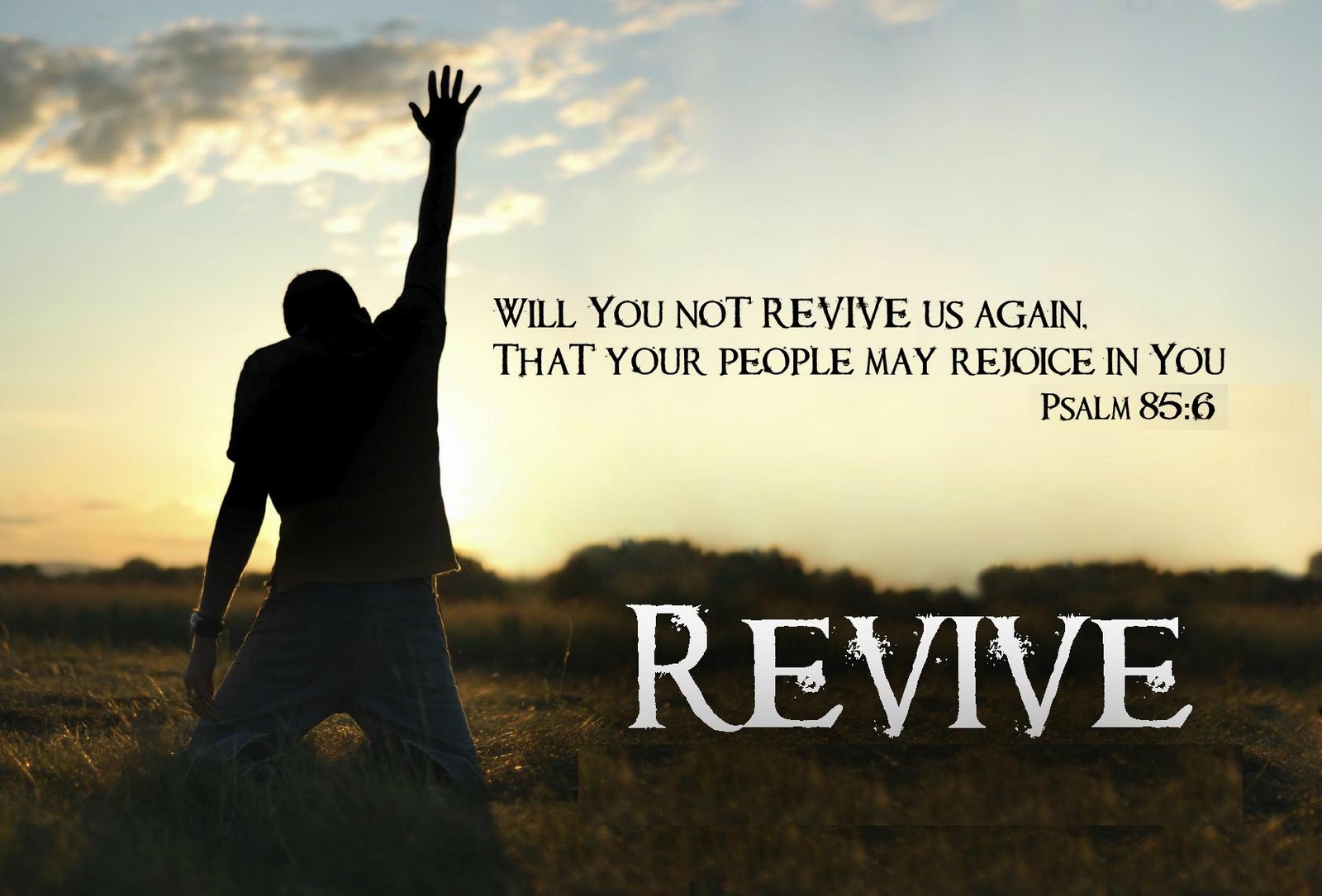
Do you long for real revival in your heart, community and our land? Today we are facing a period of moral and spiritual decline that is perhaps more widespread than ever in our history. In spite of all our efforts, programs and methods we seem to be drifting farther and father away and the darkness getting darker and darker.  As a nation we desperately need revival - a touch from heaven, a fresh encounter from God that will change our lives, behaviors, ethics, norms and even the structures of our society. God has an answer for us.  He has revealed Himself and worked in the past in times of darkness. He can do it again. In fact, He is ready to help but He is waiting on a people that will return with their whole hearts to His agenda and purposes. It is time for us to stop, reflect and re-connect with the One that can change it all. Will you be such a person? (Essay by Dr. Francois Carr).  

“I am profoundly convinced that the greatest need in the world today is revival in the Church of God.” – Dr. D.M. Lloyd-Jones [1]

“Is God gone too? I began to seek God, but couldn’t find him.” Jim Bakker spoke these words as he pondered about the time he had spent in prison. Jim and his wife, Tammy Faye started the Praise The Lord Club in 1967. It became one of the most televised ministries of its time. They added Heritage USA, a Christian theme park. They saw prosperity as a gift from God. Everything around them seemed to be blessed, until a series of scandals surfaced in 1987. Jim was caught funneling money and paying a $265,000 bribe to his church secretary to cover up their adulterous relationship. Newspaper reporters began to investigate them and discover financial wrongdoings. They discovered that more than $158 million of the ministry's funds were spent on themselves. Jim admitted to spending money on luxury cars and six mansions. He had forty-seven bank accounts in his name. They have wasted money on all kinds of luxuries, this even included $60,000 in gold-plated bathroom fixtures.

He was convicted of fraud and sentenced to forty-five years in prison and given a $500,000 fine. He served almost five years before he had been paroled for good behavior. God used that time to draw Jim back to Himself because He meant it for his good. Looking back on his time in prison, Jim Bakker said:

“The first months of prison were devastating. After being in public ministry for every day of your life and then finding yourself with everything gone – not only the material things, but friends and reputation – facing forty-years, you wonder, Is God gone too? I began to seek God, but I couldn’t find him.” [2]

Where is God?

The words of Jim Bakker reminded me of a question which was asked by Gideon, one of Israel’s Judges, in the Old Testament when Israel faced many trails, transitions and persecutions? He asked, “O my Lord, if the Lord is with us, why then has all this happened to us? And where are all His miracles, which our fathers told us about, saying, ‘Did not the Lord bring us out of Egypt?’ But now the Lord has forsaken us and delivered us into the hand of the Midianites.”

The children of Israel`s way of living was evil in the sight of the Lord (Judges 6:1-10). So God delivered them in the hands of Midian and the Amalekites and the children of the East who bordered Israel. He allowed the Midianites to raid Israel for seven years. The annual raid took place around harvest time, destroying their crops, stealing the livestock and ravaging the land, leaving people living in fear, caves and in deep poverty. If you can imagine and picture the scenario, you’ll have some idea about the uncertainty and suffering Israel experienced. They were gravely impoverished. The crops and harvest were gone. Their desperately needed provisions were gone. They too might have wondered if God was gone? Being weary of hiding and struggling they cried out to their God.

An unexpected visit brings insight

Gideon did not doubt the existence of God. Maybe his family read the Law of Moses or talked about the miracles of God by the hands of Deborah and Barak (Judges 4-5) or days gone by? Maybe he was thinking about the message of the prophet (Judges 6:8) sent by God? However, he struggled with the fact that God had worked mightily on behalf of Israel in the past but not at that time in history. Seven years of suffering had gone past and it seems not to be ending.

God met with Gideon around about the eighth Midianite invasion. At the time he was a farmer and descended from the tribe of Manasseh. The Angel of the Lord came and sat under the terebinth tree which was in Ophrah, which belonged to Joash the Abiezrite, while his son was busy threshing wheat in the winepress, in order to hide it from the Midianites. The Angel of the Lord appeared to him, and said to him, “The Lord is with you, you mighty man of valor!”

When we first met him, he was hiding – attempting to covertly thresh wheat in a winepress (Judges 6:11). The process of beating out grain and separating it from the chaff normally took place out in the open, on a hilltop where the breeze would blow the chaff away. He took cover in the shelter of a winepress. This was not the ideal place for winnowing wheat and maybe he thought it would go undetected. No doubt Gideon was startled by the fact that his hiding place was discovered. But we can sympathize with him. He was afraid.

Gideon struggled with faith and was a bit of a coward. However, he is a great encouragement for people that have a hard time believing that God can make anything out of them or do anything with them or change their current circumstances. The Lord can and wants to show himself strong (2 Chronicles 16:9). He is just waiting for someone to really believe in Him, trust Him enough to adjust their lives and follow Him.

He encountered a truth

Gideon was reminded about God’s power and presence in days gone by when He led the people out of Egypt into the Promised Land. He reasoned about their circumstances and what was happening and the problems and hardships they face and experienced, wondering where the power and presence of God had gone. This caused within him a crisis of faith, struggling with doubt and fear as he was trying to understand and making sense of it all.

I can imagine the questions that must have crossed his mind: Does God really cares? Does God know what He’s doing? Will God take care of us? Will God keep His promises? Why are we living in poverty, fear and hiding in caves? If God is with us, where is He? Is He gone? Does He even exist?

One would think that God would give him a well-thought-out plan of action, some war strategies, resources and lots of encouragement when He answered him. That did not happen. He simply said to Gideon: “Surely I will be with you, and you will defeat the Midianites as one man” (Judges 6:16, NKJV)

When the Lord spoke, he addressed the real issue affecting Gideon’s faith and that of the nation. God was still at work but Gideon could not see or hear Him speak or understand His message, and experience His care and provision.

God still speaks

Firstly, God was speaking through the Midianites, Amalekites and people from the East (Judges 6: 3). God allowed the trials and hardships to take place because of their sin and disobedience. He wanted to get their attention and lead them to repentance and have them return to Him. His desire was to restore them. He wanted to be their God and live among them and bless them.

God is still present

Secondly, God was still with him and with the nation. The Angel of the Lord confirmed this when He said: “The Lord is with you” and ‘surely I will be with you’. He could not see or experience the fact of God`s presence and closeness. His view and outlook on life was blurred by his circumstances and that which was happening around him. It is a reality that also affects us today, that God is present amidst the hardships and uses that to draw us to Himself.

God still cares

Thirdly, the people of Israel cried out to God. God still cares and His desire was to help them. He wanted to bring them back to Himself and reveal His glory to the nations. God appeared and revealed Himself to Gideon and invited him to join Him on His mission. God`s desire was to work in and through him, but he had to believe, adjust his life and accept His invitation (Judges 6:11-14).

Some similarities today

We can draw some conclusions from Gideon`s conduct and experience which are applicable even today as there are some clear similarities with the people of Israel and life as we now it today. In reality the times we live in are some of the most demanding and challenging we’ve ever known. People worldwide are facing difficult trials, conflicts, persecution and transitions which are affecting all aspects of their lives. Countries and nations war against each other, groups of people raid towns and villages, killing one another for more power, land and money. Riots, unrest, widespread violence and conflicts are reported daily on the news media. We see millions of refugees relocating to other countries searching and looking for safety and a better life and future. People of all cultures and backgrounds are living in poverty, uncertainty and in fear. The political and economic crisis worldwide continues to affect all of us as governments and leaders have no solution to bring about peace, stability, growth and prosperity.

Businesses are closing down, while debt and unemployment continues to escalate. Life has become a daily struggle for many. Survival, paying the bills and put food on the table are part of this daily struggle. It was clearly visible on my recent trip to the Middle East, noticing the number of hotels closing down and unemployment and poverty increasing due to a drop of eighty percent of tourism. Ron Blue in his book, Surviving Financial Meltdown explains that the rising cost of living, the economic turn down, job insecurities, growing debt, losing of homes while many have no savings for when they grow old is the cause of fear in the hearts of many [3]. We are truly living in uncertain, unsettling and difficult times leaving many of us with the same burning questions as Jim Bakker and Gideon.

Where is God? Does He still exist? Why is this happening? Will it ever stop?
Does He really cares? Is there any hope?

The lesson is clear. When we stop seeking God and His heart the lit comes off and the blessing stops until we stop and pay attention to what we experience (Haggai 1).

The Dilemma in the World

We continue to see a great moral, ethical, and spiritual decline that permeates our nations, culture and communities. Political and corporate scandals and corruption are common at all levels of society and leadership. Sexual promiscuity, pornography, abortions, outbreak of diseases, crime, violence and global terrorism plague the nations and world.

As a result, the world plunges deeper and deeper into darkness. We see thousands of people, aimlessly drifting and debasing themselves and human dignity in public and in private. A spirit of lawlessness and spiritual apathy hangs like a fog over our land and the world. People are doing what seems to be right in their own eyes (Judges 2). Richard Dortch, senior vice-president of PTL who was also convicted and sent to prison with Jim Bakker later said: “Pride, arrogance, and secrets led to the scandal.” He also said they did not plan the scandal; instead it was the natural result of living for oneself rather than for God [4].

We are beginning to see the disintegration of foundational social institutions, culture and history. Unless something positive happens, which will transform our lives and redirect our course of life, civilization, as we know it, is sure to change even further for the negative. Dr. Henry Blackaby, author of Fresh Encounter, wrote:

“We seem to be drifting farther and farther away from God and His standards. The darkness around us seems to be getting darker and darker, but the problem is not with the darkness because the nature of darkness is evil. The problem is the lack of light, because when light shines it dispels the darkness” [5].

The Dilemma of the Church

Many communities and cultures are not Christian or even religious anymore and in many instances even hostile towards anything spiritual. The sacredness of marriage, family, home and Church is forgotten. Great numbers of people start to doubt God and His existence, and coldness towards God and the Church are clearly growing. There seems to be a new way of thinking and a drifting away from God. People have become more critical towards religion. New schools of thought and a new kind of spirituality have developed. According to John Dickerson in his book, The Great Evangelical Recession only 1 out of 10 people is Christian and in the next thirty years it will be 1 out of every 25 people [6]. We are on a downward spiral and this tendency is just continuing getting worse and out of control.

The Dilemma in the Church

Church membership is declining in the Western world. Most churches are shrinking and pastors are leaving the pastorate. Churches close their doors weekly. Instead of seeing Churches growing, establishing and equipping believers and evangelizing the lost they have become a weak minority. The Church has become powerless with little or no impact.

Many of them have fallen into the lure of novelties, marketing and teaching a doctrine without power, while others pursue the one church health program to the next. Calendars and schedules are filled with events and programs, the latest fads and quick fixes, chasing the ABC’s (Attendance, budgets and cash) of a successful church. Instead of finding change, transformation and reality they find themselves going through the motions of religious activities with little of no impact in our communities and cultures.

Jim Cymbala, pastor of Brooklyn Tabernacle says:
“Nothing can defeat the life-giving power of the Holy Spirit.” But, a powerful storm is surging against the Church, threatening its health. Yet most is asleep or unaware of the problems within itself that is warning signs. He said we are not as big as we think we are, Biblical literacy is declining and personal transformation has become rare [7].

The Dilemma of Christians

People have become stress out, tired, overcommitted and overloaded. There seems to be no time or energy left for God and Church. Many have become mere spiritual spectators and losing interest. I believe the reason for that is because we are not well rooted in our faith and in Jesus Christ.

First, instead of cultivating an intimate personal relationship with God we replace Him with programs, and exercising religious activities. According to Dr Andrew Murray, all believers run a risk in their devotional life and walk with God "of substituting prayer and Bible reading for living fellowship with God, the living interchange of giving Him your love, your heart, and your life and receiving from Him His love, His life and His Spirit" [9].

Furthermore, the lost sense of God’s presence and power in a believer’s life, church life, meetings, and in the general, a loss of the manifest awareness of God`s presence in our communion with Him is also a major factor and reason why many are struggling with unbelief, unconfessed sin, careless living and worldliness in their action or attitudes. Too often sin makes us complacent, dulling our spiritual sensitivity and blocking the channel of God’s blessing. Tom Elliff, explains this fact in his book, The Pathway to God’s Presence. He said: “a believer’s life, without the presence of God, is destined to flounder because we are not immune to the pressures and strains of life” [10]. It is a sobering thought that the loss of a definite sense of His presence might be the reason for our failure and low-level impact.

The lack of intimacy and God’s presence can rob us of God’s best, but we find ourselves hesitant to discuss it or even acknowledge or be willing to address this issue. It seems to be easier to just launch a new program and project, instead of becoming quiet, sit at His feet and allow Him to speak to us. However, exhausted by the added responsibilities, pressures and demands of the day, we find ourselves drifting away from our commitment to the Lord, lacking spiritual power and energy, resulting in failure, discouragement, more frustration and no lasting impact on our community.

Is there any Hope?

It is easy to despair. Robert Coleman, in his book The Coming World Revival states that it is easy to be pessimistic when problems seem overwhelming. Everything seems to be dark and one may feel that a better future seems to be impossible. However, we must remember that it is usually in these periods of great darkness and crises that revivals and transformations were born. This can happen today as well. Coleman says that our sense of helplessness can make us more sensitive to the need for supernatural grace. [11]

Billy Graham, well-known evangelist once asked a university professor what he thought was the greatest need of our hour. He responded:

“I could give you a variety of answers all the way from tax relief to disarmament. I may surprise you, because I am not a religious man, but I believe that the greatest need that we have at this hour is a spiritual awakening which will restore individual and collective morals and integrity throughout the nation.” [12]

First century Christians and churches had their problems but they were able to change and transform the world. Today we have all the resources and technology but we struggle with changing the world. Could it be that we have been looking for answers in all the wrong places? Just like the people of Israel and Gideon could it be that God is allowing us to drift away from Him because we have stopped seeking Him and replaced Him and His agenda with our own agenda and way of thinking?

I believe that there is hope and that God is presently at work. God still speaks. He is still present and He still cares. The question is: Can we see Him, hear Him speak in and for the times we live in? As I travel throughout the nation, I see some encouraging signs:
  • There are a growing number of people that is longing for more. They cry out for more reality in their walk with God and for a deeper knowledge of God. They know God is alive and are not satisfied with the current status and their experience.
  • They also want to see and experience God today like in the ways God’s people have experienced His mighty power and presence, in Scripture and in history.
  • There is a willingness to return to God’s standards and His agenda, wanting to Glorify Him.

Where to start?

The heart`s cry of many is for a genuine revival – revival that comes from God and not from man. History gives testimony that whenever God had sent revival or there was a touch of His people, lives had been changed. Christians and Churches also have experienced new power and fervor to do His work and glorify Him. But, many are saying, “We don’t know what do? Where do we start?

God’s Word provides the answer. He has spoken clearly about His expectations and standards. He has revealed some principles and examples. He has created all mankind for His glory (Isaiah 43:7). So, how do we glorify Him? By doing and finishing His work and agenda (John 17:4). I believe that if we give special attention to what is on His heart, He will reveal and manifest Himself once again (John 14:21-23). What is on His heart?
  • His eternal and personal purpose and plan (Romans 8:29)
  • His Great Commission (Matthew 28:18-20)
  • His compassion for the harvest and our response (Matthew 9: 35-38)
Firstly, we need to realize that Revival and Spiritual Awakening starts with God’s people and understand how that connects with His purposes and great commission. What is Revival? When does God send Revival? Why does He send Revival? What should we be doing right now? Do you long for real revival and fresh encounter with God?

Image result for revival spiritual

Secondly, Christians and Churches need to become transformational in impacting their surrounding communities and cultures if we want to see lasting change. It will only happen if we understand our call and character and how that affects our community and culture. We also need to become ‘TransforMissional’ in our outlook and approach for the future, as we Re-discover the biblical model for lasting transformation.

God is ready to bless us (Hebrews 11:6) and pour out times of refreshing. He is waiting for us to return to His heart and His original intention, adjust our lives, schedules and agendas and respond in obedience to Him.

Will you be such a person? Will you stop, reflect and pay attention to what you, your church or country experience? God is not dead and gone. He is still to be found. He cares and still speaks. He is waiting for us to return to His heart and experience His power and presence. Don’t settle for less.

Author: Dr. Francois Carr

Notes:
1. Stephen Olford, Heart Cry for Revival (Ross-shire, Scotland, Christian Focus, 1962), p 15
2. Dave Early, Living in His Presence (Minneapolis, Bethany House Publishers, 2005), p 77-78)
3. Ron Blue, Surviving Financial Meltdown (Tyndale House Publishers, Carol Stream, Illinois, 2009), page 3
4. Dave Early, Living in His Presence (Minneapolis, Bethany House Publishers, 2005), p 78)
5. Henry Blackaby, Fresh Encounter (Nashville, Tennesee, LifeWay, 2006), Backpage
6. John Dickerson, The Great Evangelical Recession
7. Jim Cymabla, Storm (Grand Rapis, Zondervan, 2014), p 10-13 and backpage
8. Bruce Bennie, Andrew Murray Theologian by Heart (South Australia, 2004) p 17-18
9. Bruce Bennie, Andrew Murray Theologian by Heart (South Australia, 2004) p 19
10. Tom Elliff, The Pathway to God’s Presence (Fort Washington, Pennsylvania, CLC Publications, 2014), p. 39
11. Robert Coleman, The Coming World Revival (London, Hodder & Stoughton, 1989), Introduction
12. Lewis Drummond, Eight Keys to Biblical Revival (Minneapolis, Bethany House Publishers, 1994), p 7)

Francois Carr, BTH, MCC, D. Min, NDPM, is the Executive Director of Heart Cry in South Africa.  He is well known for his burden for revival and a popular speaker in Africa, North America, Europe, United Kingdom and New Zealand.  He authored several books and articles on prayer, holiness and revival. Francois’s ministry, Encountering God and Heart Cry  exist to glorify God by helping Christians and churches to experience God more intimately and mentor them on the way to Revival and Spiritual Awakening. He co-sponsors the Heart Cry for Revival Conference that takes place at the Billy Graham Training centre in Asheville, NC.  He is married to Dorothea, have one child and currently resides in Pretoria, South Africa. 


Monday, 7 November 2016

Science and the spiritual realm

The spiritual realm is the most basic ingredient found in about all religion. It has often been forcefully renounced in scientific circles. Atheists take it for granted that it does not exist. In this essay, I show how that realm has been conceptualized in Immanuel Kant's philosophy. I also argue that its existence has been confirmed in science in the context of the quantum realm!

The idea that a spiritual realm exists alongside our material world is extremely old. All the peoples of the ancient world believed in it. They believed that although this realm is inaccessible to our senses, it nonetheless exists and we have access to it through our human soul/spirit. Apart from human spirits, there are also other kinds of spirits and gods who belong to that realm. The spiritual realm is also part and parcel of the Judaeo-Christian worldview. In their view, God's Spirit is operative in the spiritual realm. They also believe that this realm makes life after death possible and that heaven and hell exist in this realm.

With the onset of the scientific age, the validity of these ideas was increasingly questioned. Although science is clearly restricted in its reach and is only able to study those things which are empirically accessible, some took that to mean that only that which is in fact so accessible should be reasonably accepted into our metaphysical view of the world. Enlightenment atheists and agnostics believed that the ancient belief about a realm outside our sensible and experimental reach is just a pie in the sky. In their view, such religious views have no scientific grounding and should be discarded since they belong to the pre-scientific age when people held primitive ideas, many of which have been refuted by science. In their view, we cannot believe things that cannot be proven. And since this realm lies beyond the reach of our experiments, they rejected it.

Even today, when we consider the spiritual realm in the context of the scientific conversation, some would immediately take offence. They feel that it is totally unacceptable to even seriously consider something like that. Now, I agree that we cannot at this point in our scientific progress say anything about the existence of spiritual entities. On the other hand, the possible existence of such a supersensible realm that exists alongside our material realm is in fact nowadays within the reach of serious science! We can consider its possible existence in the light of contemporary science. I argue in this essay that its existence is confirmed in quantum physics.

When we want to discuss such a realm in the context of serious science, we must, first of all, say what such a realm would entail. We need a rational-theoretical model that we can subject to rigorous scientific testing. Luckily we have such a model: The philosopher Immanuel Kant developed such a metaphysical model in which he incorporated exactly such a supersensible realm!! Kant gave very particular specifics on what such a realm would be like if it exists. In this essay, I use this Kantian model when I engage with the question of whether that realm has been confirmed in science.

Philosophy and the spiritual realm

The intellectual consideration of the spiritual realm started with the well-known philosopher Plato (5th to 4th century BC). Plato reworked the idea of the spiritual realm as it was taught by the Orphics, an early group of mystics, into his own idea of an intelligible realm. As such he conceptualized this realm as an invisible realm which, although inaccessible to our senses, may be accessed through our intellectual intuition. In his Phaedo, Plato states quite openly that his idea is based on the spiritual realm of the Orphics and he even argues that the soul exists in that realm. As such two worlds may be distinguished: A visible world in which the human body exists and an invisible realm in which the soul exists.

In Plato's view, the invisible realm is "the realm of the absolute, constant and invariable" whereas the visible world is always changing. He got this idea from Parmenides of Elea (born ca. 515 BC) who also argued for two such worlds, namely one that is the "real" world which is eternal, indivisible, motionless and changeless and the other which is the world of our senses, which is a world of "appearances". In Plato's view, the invisible "forms" of material things belong to the first realm, whereas the visible things of the material world belong to the second realm. Insofar as the soul is concerned, he writes in the Phaedo: "Since the soul is invisible, it belongs to the eternal invisible world... When it [the soul] investigates by itself, it passes into the realm of the pure and everlasting and changeless; and being of a kindred nature, when it is once independent and free from interference, consorts with it".

Plato's opinion about the relation between these worlds changed through the course of his writing. At first (in the Phaedo) the "invisible world" is viewed as a separate domain where human souls go between lives (and where the gods live), but in the Republic, the "intelligible" world (as it is now called) is more closely connected to our own world. This (our) world is somehow dependent on the "real" world for its existence (where the forms for the phenomena in this world are situated). In the Timaeus, the real world (of unchanging being where the forms are situated) underlies this world (of becoming) in a very real sense in that it gives form to it.

Plato's idea of the intelligible and phenomenal realms was reworked by later philosophers like Immanuel Kant (1724-1804). In this essay, I am only concerned with Kant's so-called "critical period" when he wrote his great philosophical works. Kant accepted the Platonic distinction between the "noumenal" world, as he calls Plato's intelligible world (from the Greek word for understanding, "nous"), and the phenomenal world. In Kant's view, the noumenal realm is the substrate of the phenomenal world [1] and all phenomena have originally appeared from that substrate. Kant also accepts the human soul, which in his thinking is just the "noumenal" part of humans, i.e. that part which belongs to the noumenal realm.

In Kant's metaphysics as he presented it in his philosophy of science in the Critique of the Power of Judgment, the noumenal realm, which is also called the "supersensible realm", has five basic characteristics, namely 1) it is supersensible, that is, beyond human experiential and experimental reach, 2) it is outside proper space/time 3) it is outside "nature", which refers not to empirical nature but the concept of nature as a system which is ruled by mechanism, that is, deterministic causality 4) it is governed by absolute spontaneity and the entities in this realm, the non-extended wholes-and-parts (my terminology) has the spontaneous potentiality to produce material parts and aggregated wholes in nature 5) it produces phenomena in nature which simply "appear" in contrast with the appearances of everyday objects of the senses (for a detailed discussion, see [2]).

Since Kant's time, there had been general agreement in philosophical circles that such a realm does not exist and that Kant has merely brought it into his philosophy to accommodate the Judaeo-Christian worldview, especially the soul and life after death. The problem that they had with this realm is that it is forever beyond empirical reach. Science can therefore never engage with it.

The supersensible realm and science

There is, however, one important possibility regarding the supersensible realm that Kant did not foresee which may allow partial empirical access of that realm (allowing for the possibility of manipulating entities in such a realm). This concerns his conception of space and time. Kant took space and time as pure intuitions through which we as humans engage with the material world. He also allows for various possible conceptions of space which may (through reason) be ascribed to those things that are beyond perception, which includes "noumena" (the entities that belong to the noumenal realm). Kant calls this "ideal space". What Kant did not foresee is that time may be coupled, not with proper space (as we normally do in perceiving the material world), but with ideal space which describes noumena.

If this last possibility is allowed, then we might be able to bring the noumenal realm under scientific scrutiny. And this is exactly what happened. In quantum mechanics, space and time are decoupled and time is coupled with abstract Hilbert space which is associated with quantum entities. We know today that the quantum realm adheres to all the Kantian characteristics of the noumenal realm as I will now show.

1. Supersensible. Quantum entities in their pre-measurement state have irreducibly complex amplitudes (i.e. in terms of complex numbers) and as such, they can never be brought into the range of human perception which is restricted to material things governed by real numbers (these complex numbers do not even have a real component). It is only when we measure these entities that they become situated in proper space-time.

2. Outside proper space-time. The kind of space that is used to mathematically describe these quantum entities (called Hilbert space) is also described in complex numbers! Although there have been efforts to reformulate such equations in proper space, these have not been successful (their complex nature is merely made implicit). The entities that we study in quantum mechanics are therefore not in proper space until we measure them. In Quantum Field Theory, the quantum entities are even outside space-time before measurement [3]. This is exactly what Kant has postulated for the supersensible realm.

3. Outside "nature". The quantum mode of existence (as I call it) which involves superpositions of states is also outside "nature". The interactions between quantum entities go beyond the proper space-time framework as can be seen in the EPR (Einstein, Podolsky & Rosen) experiments (this name originated from their famous paper). Such connections are not restricted to the deterministic rules governing objects in space-time. In fact, Redhead [4] has shown that the so-called Bell proof (which led to the EPR experiments) implies that all kinds of determinism have broken down in these interactions between the quantum entities.

4. Spontaneity. We also know that the quantum mode of existence is governed by another rule than determinism, namely indeterminism (which may be taken as spontaneity). Niels Bohr used the empirical evidence of spontaneity to formulate his well-known quantum postulate. As such we can say that quantum outcomes are spontaneously produced. One of the clearest examples of such spontaneity is atomic decay which happens absolutely spontaneously without any external intervention. 

5. Phenomena that "appear". The phenomena that are so produced - which include those microscopic particles that are observed during impacts, in bubble chambers etc. - are different from the everyday phenomena in that they "appear" from the quantum substrate.


Image result for bubble chambers images
Bubble chamber: particles "appear"
It is clear that all five relevant characteristics of Kant's supersensible realm have been confirmed in quantum physics. This means that science has confirmed the existence of a supersensible realm exactly in the form that Kant postulated it in his metaphysics! The quantum realm is, in fact, Kant's supersensible realm. Although the existence of the soul has not yet come into the range of scientific research, there is no reason why that would not eventually happen [5]. The fact is, however, that this very realm that modernist philosophers and scientists rejected as a pie in the sky, has now been (indirectly) confirmed empirically.

This brings me to a remarkable observation: all the ancients believed in a supersensible realm which was forcefully rejected by modernist science and especially by atheists since it did not conform to their worldview. The ancients were right; the modernist scientists, philosophers and atheists were wrong! The very spiritual realm that Kant conceptualized as the noumenal realm in his philosophy - which in philosophical discussion originated with the view of the mystics in Plato's time - has now been confirmed by science. 

Conclusion

We live in remarkable times! The science of modernist times is dead - and the metaphysical views that were grounded on that science are dead too. Although those who reject the possibility of a spiritual realm do so mainly because they reject the idea of gods (spirits) and especially God, it seems that scientific discovery is not on their side. Scientific research and discovery about what our world is like are consistent with a supersensible - or spiritual - realm.

I freely admit that this essay is restricted in scope and that the issues require more detailed discussion. I have already done this elsewhere [2]. Although atheists could try to argue that the view presented here is merely one alternative to other possible readings of quantum physics, I can say in defence that the basic things that I argue for regarding the supersensible realm (the five characteristics) are indeed widely accepted in scientific and philosophical circles. I argue that science has in fact confirmed Kant's conceptual system which was originally based on the idea of the spiritual realm. I conclude: the spiritual realm (in its most basic formulation) has been confirmed by science.

[1] Interpreters usually think that Kant's idea of the noumenal realm in his first great work, the Critique of Pure Reason, is substantially different from that in the two other Critiques, namely the Critique of Practical Reason and the Critique of the Power of Judgment. I reject that. In my view, Kant held similar views (which did develop over time) throughout his critical period, i.e. in all three Critiques.
[2] McLoud, W. Kant, Noumena and Quantum Physics published in Contemporary Studies in Kantian Philosophy 3 (2018)
[3] Auyang, S. Y. 1995. How is Quantum Field Theory Possible? Oxford: Oxford University.
[4] Redhead, M. 1987. Incompleteness, Nonlocality, and Realism. A prolegomenon to the philosophy of quantum mechanics. Oxford: Wiley-Blackwell.
[5] I plan to argue for the existence of the soul in one of the essays in this series.

Author: Dr Willie Mc Loud (Ref. wmcloud.blogspot.com)
The author is a scientist-philosopher (PhD in Physics, MA in Philosophy). He writes on issues of religion, philosophy and science.

Science and God. Part 5. In defence of the soul
Science and God. Part 6: Science and Atheism 
Science and God. Part 7: Science and spiritual intuition
Science and God. Part 8: The Christian and Evolution